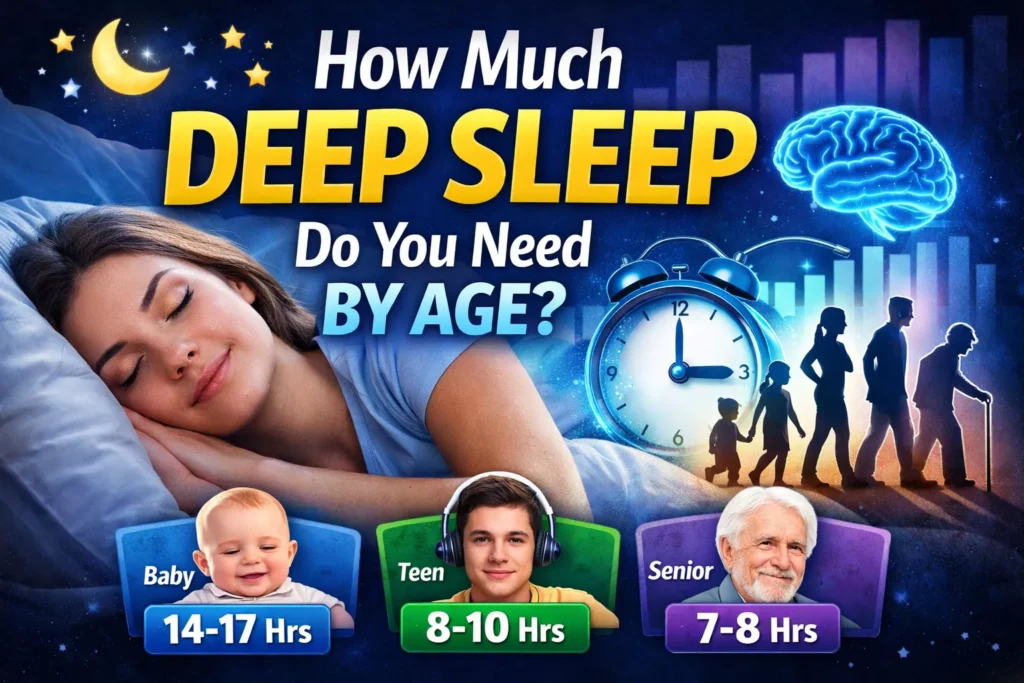
Deep sleep should make up about 13–23% of your total sleep. For most adults, that’s roughly 1–2 hours per night. Children and teenagers usually need more deep sleep because their bodies and brains are still developing, while older adults naturally get less. Using a sleep cycle calculator can help you plan your bedtime to maximize deep sleep and wake up refreshed.
Ever wondered why you still feel tired even after getting 7 or 8 hours of sleep? The answer often lies in how much deep sleep you’re getting, not just how long you sleep.
Deep sleep is the most physically restorative stage of sleep. It’s when your body repairs tissues, strengthens immunity, and consolidates memories. Without enough deep sleep, even long nights of rest can feel unrefreshing.
In this guide, you’ll learn:
-
How much deep sleep do you need by age
-
Why deep sleep is so important
-
How to improve deep sleep naturally
-
How tools like the UnfreezeTools Sleep Cycle Calculator can help you sleep smarter
What Is Deep Sleep and Why Does It Matter?
Deep sleep, also called slow-wave sleep, is the stage where your body experiences its most powerful recovery. Heart rate and breathing slow down, muscles relax, and blood flow increases to repair tissues. Your immune system strengthens, and your energy levels reset. According to the Cleveland Clinic, without enough deep sleep, you may feel foggy, tired, and more prone to illness, even if you spend many hours in bed.
Why Deep Sleep Is Critical
-
Physical recovery and muscle repair
-
Memory consolidation
-
Hormone regulation
-
Immune system strengthening
-
Emotional balance
Deep Sleep vs REM Sleep: What’s the Difference?
Deep sleep restores your body, while REM sleep restores your mind. Both are essential, but they serve different purposes.
| Feature | Deep Sleep | REM Sleep |
|---|---|---|
| Body repair | ✅ Yes | ❌ No |
| Brain activity | Low | High |
| Dreaming | Rare | Common |
| Memory storage | Physical memory | Emotional & creative memory |
You need both for complete recovery.
How Much Deep Sleep Do You Need by Age?
Deep sleep needs change as you age. Children require more deep sleep than adults, and older adults naturally get less.
Recommended Deep Sleep by Age
| Age Group | Total Sleep Needed | Ideal Deep Sleep |
|---|---|---|
| Newborns (0–1) | 14–17 hours | 30–40% |
| Children (1–12) | 9–12 hours | 20–25% |
| Teenagers (13–18) | 8–10 hours | 18–22% |
| Adults (18–64) | 7–9 hours | 13–23% |
| Seniors (65+) | 7–8 hours | 10–15% |
For most adults, this means 1–2 hours of deep sleep nightly.
Signs You’re Not Getting Enough Deep Sleep
If you’re not getting enough deep sleep, your body and brain don’t fully recover overnight. You may wake up feeling tired, mentally slow, or emotionally off even after sleeping for many hours. Over time, poor deep sleep can weaken your immune system, reduce concentration, increase stress, and raise the risk of long-term health problems. Deep sleep deficiency shows up through physical, mental, and performance-related warning signs.
Mental & Cognitive Signs
These affect how your brain functions during the day:
-
Brain fog or slow thinking
-
Poor focus and short attention span
-
Memory problems or forgetfulness
-
Difficulty learning new information
-
Reduced creativity and problem-solving
-
Feeling mentally “heavy” or dull
Physical & Energy-Related Signs
These impact your body’s recovery and stamina:
-
Waking up tired even after 7–9 hours of sleep
-
Low energy throughout the day
-
Frequent yawning or need for naps
-
Muscle soreness that lasts longer than usual
-
Weakened immunity (getting sick more often)
-
Headaches or body aches in the morning
Emotional & Mood Changes
Deep sleep is vital for emotional regulation:
-
Increased irritability
-
Low motivation
-
Higher stress levels
-
Anxiety or mild depression symptoms
-
Feeling emotionally overwhelmed easily
Performance & Productivity Issues
This shows in work, study, or daily tasks:
-
Reduced productivity
-
More mistakes at work or school
-
Slower reaction time
-
Lower physical performance in workouts
-
Difficulty staying organized
Long-Term Health Signals (If Deep Sleep Is Chronically Low)
Ongoing deep sleep deficiency may increase the risk of:
-
High blood pressure
-
Weight gain and insulin resistance
-
Heart disease
-
Weakened immune function
-
Cognitive decline over time
How to Check If Deep Sleep Is Your Problem
If you consistently experience several of these signs, deep sleep deficiency may be the root cause. You can:
-
Use a sleep tracker for rough estimates
-
Use a sleep cycle calculator to optimize your bedtime
-
Improve sleep habits and reassess in 1–2 weeks
Try optimizing your schedule with the
Sleep Cycle Calculator to increase your chances of reaching deeper, more restorative sleep stages.
What Affects Deep Sleep Quality?
Lifestyle, stress, diet, and sleep timing all influence deep sleep.
Key factors:
-
Blue light exposure
-
Stress levels
-
Caffeine or alcohol
-
Irregular sleep schedule
-
Room temperature
How to Improve Deep Sleep Naturally
Improving deep sleep starts with better habits.
Practical Tips:
-
Sleep and wake at the same time daily
-
Avoid caffeine after 2 PM
-
Keep your room dark and cool
-
Avoid screens before bed
-
Practice relaxation techniques
-
Exercise regularly (but not late night)
How a Sleep Cycle Calculator Helps You Get More Deep Sleep
A sleep cycle calculator helps you time your sleep around natural 90-minute cycles, increasing your chances of entering deep sleep and waking up refreshed.
Instead of guessing bedtime, use a sleep cycle calculator to optimize it.
Try:
Free Sleep Cycle Calculator – UnfreezeTools
This tool works as:
-
A sleep cycle calculator
-
A deep sleep calculator
-
A free sleep cycle calculator for planning smarter sleep
Best Sleep Schedule by Age
Aligning your bedtime with your natural circadian rhythm boosts deep sleep.
| Age | Ideal Bedtime |
|---|---|
| Teens | 10–11 PM |
| Adults | 10–11:30 PM |
| Seniors | 9–10 PM |
Myths About Deep Sleep
Many beliefs about deep sleep are outdated.
❌ “More sleep always means more deep sleep.”
❌ “You can catch up on deep sleep anytime.”
❌ “Alcohol improves deep sleep.”
How Technology Can Help Track Deep Sleep
Technology can help you understand your deep sleep patterns by estimating how much time you spend in each sleep stage. Devices like smartwatches, fitness trackers, and sleep apps use movement, heart rate, and breathing data to predict deep sleep duration. While they are not medically perfect, they provide useful trends. When combined with a sleep cycle calculator, technology becomes a powerful way to optimize your bedtime and improve sleep quality.
Wearable Devices (Smartwatches & Fitness Trackers)
Most modern wearables track sleep automatically. Popular examples include:
-
Apple Watch
-
Fitbit
-
Garmin
-
Samsung Galaxy Watch
-
Whoop
They estimate:
-
Total sleep time
-
Deep sleep
-
REM sleep
-
Light sleep
-
Sleep interruptions
How they work:
-
Motion sensors detect restlessness
-
Heart rate variability suggests sleep depth
-
Breathing patterns signal sleep stages
These tools help you spot patterns, such as:
-
Which nights give you more deep sleep
-
How caffeine, stress, or late nights affect recovery
Sleep Tracking Apps
If you don’t use a wearable, mobile apps can still help:
-
They use a microphone + motion sensors
-
Track sleep duration and disturbances
-
Estimate deep sleep based on movement patterns
They are less precise than wearables but still useful for:
-
Sleep consistency
-
Bedtime habits
-
Sleep quality trends
Important Limitation: They Are Estimates, Not Medical Devices
Sleep trackers do not directly measure brain activity. Only sleep studies (polysomnography) can do that. Trackers provide approximations, not diagnoses.
Use them to:
-
Identify trends
-
Compare good vs bad sleep nights
-
Improve routines
Not to:
-
Self-diagnose sleep disorders
-
Replace medical advice
Why Trackers + Sleep Cycle Calculators Work Best Together
Wearables show you what happened.
A sleep cycle calculator helps you improve what will happen.
This is where tools like the
Sleep Cycle Calculator from UnfreezeTools becomes powerful.
| Tool Type | Purpose |
|---|---|
| Sleep Tracker | Measures sleep patterns |
| Sleep Cycle Calculator | Plans better sleep timing |
Together they:
-
Help you pick optimal bedtimes
-
Increase chances of entering deep sleep
-
Reduce grogginess on waking
-
Improve recovery quality
Example Scenario
For example, you might notice that your sleep tracker shows you are only getting about 35 minutes of deep sleep each night and that you are waking up frequently. Instead of guessing what to change, you use a free sleep cycle calculator to adjust your routine. By shifting your bedtime 45 minutes earlier and aligning your sleep with complete sleep cycles, you give your body a better chance to enter deeper stages of rest.
After following this new schedule for a week, you start to see positive changes in your data, with an increase in deep sleep duration and fewer interruptions. More importantly, you wake up feeling more refreshed and energetic, showing how combining technology with smart sleep planning can create real, measurable improvements.
FAQs
How much deep sleep should adults get?
Most adults need around 1 to 2 hours of deep sleep per night, which equals roughly 13–23% of total sleep time. This stage is essential for physical recovery, immune function, and memory consolidation.
Can I increase deep sleep?
Yes. Deep sleep can often be improved by maintaining good sleep hygiene, keeping a consistent sleep schedule, reducing caffeine and screen time before bed, and using a sleep cycle calculator to optimise bedtimes.
Does ageing reduce deep sleep?
Yes. Deep sleep naturally decreases with age. Older adults typically spend less time in deep sleep compared to younger adults, which is a normal part of the ageing process.
Are sleep trackers accurate?
Sleep trackers provide useful estimates of sleep stages, including deep sleep, but they are not medical devices. They should not be used as a substitute for professional sleep studies or medical diagnosis.
Read Also: How to Watch Free IPTV on Smart TV